After joining CSM, all of my animation projects were created in 3D. More importantly, rather than repeating skills I had already learned, I tried to use each project as an opportunity to explore new techniques, workflows, and creative approaches. Looking back on this year, I realise that every project represented a different stage of learning and experimentation.
In the Lip Sync project, I experimented with non-human character rigging for both facial and body animation, as well as fur simulation, for the first time. This project introduced me to the more technical side of character production.

(Lip Sync project)
In the one-minute LIAF project, I experimented with complex Geometry Nodes systems to create growing plants and different procedural materials for vegetation.
(Plants created with Geometry Nodes for the LIAF project)
I also explored rigging a variety of animals, including dragonflies, butterflies, frogs, and birds. Each creature required a different approach. For example, the frog rig focused on stretch and squash to create a sense of elasticity during jumps, while the dragonfly and butterfly rigs relied on automatic wing-flapping systems. Among them, the bird rig was by far the most challenging.
(Bird rig)
The bird rig not only involved feather physics but also required a system that could control the complex motion of the wings opening and folding while allowing the feathers to follow naturally. Through these rigging experiments, I gradually realised that different movement styles often come directly from an animal’s physical structure. Understanding the relationship between structure and movement became one of the aspects of animation that interested me the most.
(Facial expression tests)
In my personal one-minute animation project, I began exploring stylised character acting and facial expressions. Most of my previous animations had aimed for a relatively realistic style, but by this stage I had become much more comfortable with the animation workflow, allowing me to spend more time experimenting with style and storytelling.
(Screenshots from my personal one-minute animation)
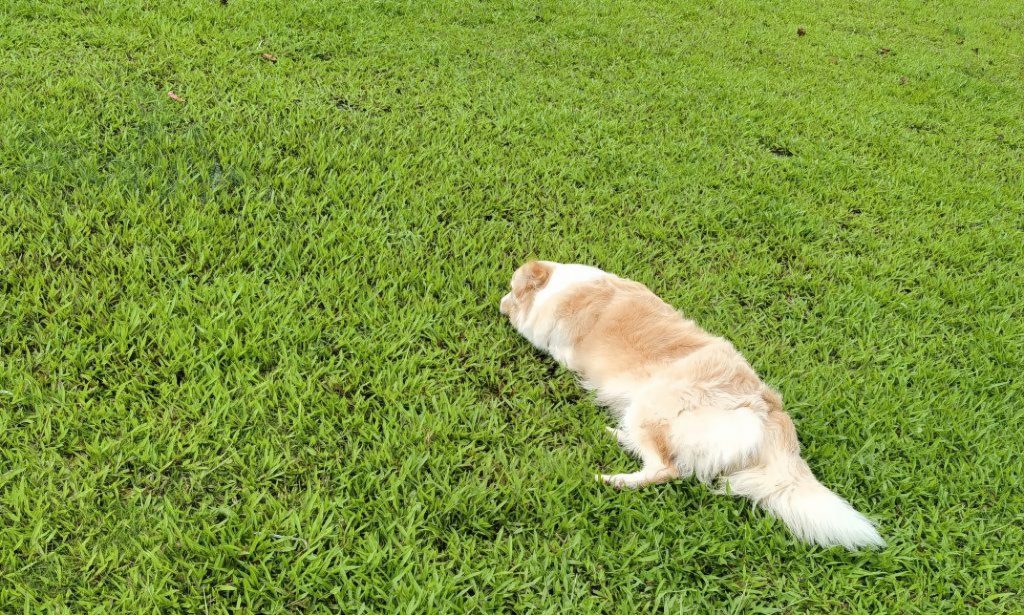
This dog was also based on my own dog. Compared with the dog character I created for the Lip Sync project, both the visual design and the quality of the performance had improved significantly.
Beyond character acting, I spent a lot of time thinking about how camera language and storyboards communicate information to the audience. In many ways, my industrial design background still influences how I approach animation. Rather than focusing only on personal expression, I often think about the audience’s experience. Can the audience understand the story clearly? Do the transitions between shots feel natural? Is the information being communicated effectively? These questions have become an important part of my creative process.
In my graduation project, I was introduced to a production pipeline that was much closer to professional industry workflows, and I also used Unreal Engine 5 for animation production for the first time.
(Scene Modelling and animation shots that I was responsible for)
From creating PBR assets and using facial capture technology to managing animation assets through Unreal Engine Sequences, the project helped me understand that animation is not only about creating individual shots. It is also part of a larger production pipeline that requires collaboration, organisation, and communication between different departments. These experiences gave me a much clearer understanding of how animation is produced in a professional environment.
Looking back at these projects, I realised that I have consistently tried to challenge myself with new skills and techniques. From character rigging and fur simulation to Geometry Nodes, animal rigging, stylised performance, and Unreal Engine workflows, I gradually developed a broader and more complete understanding of animation production.
Rather than focusing on mastering a single piece of software, I prefer to use different projects as opportunities to expand my skill set and explore new areas of interest. For me, learning animation is not about following a fixed workflow. It is about continuously experimenting, discovering new approaches, and understanding how different techniques, styles, and production methods work together.